Peaceworks In Business Week: Making Social Entrepreneurship Matter

August 6th, 2008

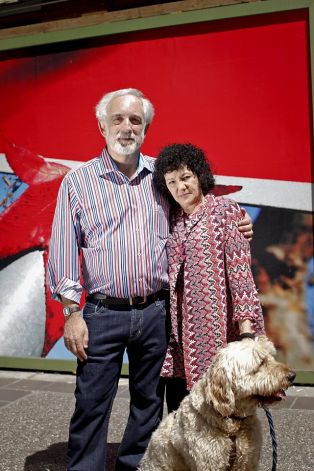
Here’s a article about Peaceworks, a “successful global business that promotes peace through commercial ventures among Israelis, Palestinians, Egyptians, Turks, Indonesians, and Sri Lankans”. They are pioneering a different flavor of social entrepreneurship that is promoting peacemaking through business.

“We are using market forces to achieve the goal of peace and coexistence,” says Lubetzky. Having foes unite in business, he explains, works on three levels: First, it helps break down stereotypes; second, it creates an incentive to continue to work together; third, in doing so, it helps puts an end to regional violence and fundamentalism that feeds off despair.

The article discusses the story of the founder, Lubetzky, and how he started PeaceWorks.

Synergos Social Innovators Program

August 6th, 2008

The Synergos Institute, based in New York City has launched a Social Innovators Program in the Middle East and North Africa and sends the following message:

Are you making a difference in your community?

We can help give you the tools and funding to do it better.

Synergos Social Innovators Program

We’re hoping to make a difference to your difference. The Synergos Social Innovators Program is a three-year program created to identify and support twenty creative individuals who are implementing successful social projects in Egypt, Jordan, Lebanon, Morocco or Palestine.If you are selected as a Social Innovator, you will receive a financial award of US$17,000 per year for two years. You will also receive training, mentoring and peer learning as well as connections to business, government, philanthropic and other civil society leaders across the world.

To Apply

We are accepting applications through September 15, 2008.

Please visit www.synergos.org/socialinnovators/ for additional information, eligibility requirements and access to our application form, available in Arabic and English.  Please email us with questions at socialinnovators@synergos.org.

www.synergos.org/socialinnovators/

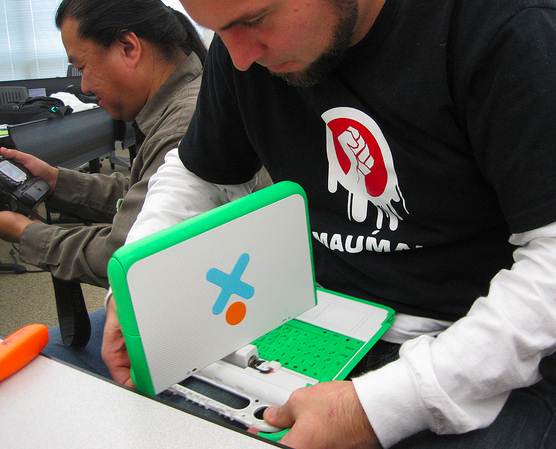
OLPC Makes It To India

August 5th, 2008

It was a disappointment when India didn’t show any interest in the OLPC, but it looks like the non-profit has made considerable progress in the country with some local help:

Two years later, Negroponte is back to open a new office in New Delhi and launch the OLPC program in India on Aug. 4. Despite all the rebuffs, Negroponte’s urge to sell in India is stronger than ever. “India is the largest market for us, and I had to be here,” he says. More important, Negroponte has a new partner—one of India’s politically influential private-sector conglomerates. The Digital Bridge Foundation, part of Reliance ADA Group, owned by Indian billionaire Anil Ambani, is providing the technology backbone and logistics for the installation of OLPC’s white and green XO laptops in primary schools.

Socially Responsible Investment Firm Bought Shares In Defense, Tobacco, and Gambling Businesses

August 4th, 2008

Forgot to link to this article last week from the WSJ:

Pax World Management Corp., one of the best-known “socially responsible” investment firms, settled Securities and Exchange Commission charges that it violated its own rules against purchasing shares in companies involved in such businesses as defense, alcohol, tobacco and gambling.

The settlement — in which Pax agreed to pay a $500,000 fine — marks the first time the SEC has taken action against a purportedly socially responsible fund for failing to live up to its mission. The SEC said it uncovered the problems in a routine examination.

The Problem Brewing In Microlending

August 1st, 2008

There’s been a long running rift in the micropayments world, with Muhammad Yunus, the Nobel Prize winning founder of Grameen Bank, on one side and for-profit counterparts such as Compartamos on the other side. Yunus has accused these for-profit lenders of being nothing more than loan sharks. Compartamos defends themselves and say that they create real value. That hasn’t stopped Yunus from promoting a global truth-in-lending standard with the creation of an organization to monitor banks’ behavior.

In an effort to head off a potential crisis in the fast-expanding microfinance industry, its leaders are adopting global truth-in-lending standards and creating a system for comparing loan terms offered by competing lenders. To manage the effort, a new self-monitoring organization, MicroFinance Transparency, is being set up as the industry’s policeman. The goal is to prevent companies from taking advantage of poor people with high interest rates and misleading credit offers.

The initiative was announced on July 28 at a microcredit conference in Bali by Chuck Waterfield, a professor at Columbia University who spearheaded the initiative, and Nobel Peace Prize winner Muhammad Yunus, who launched the microcredit revolution in Bangladesh 30 years ago with his Grameen Bank. “Microfinance emerged as a struggle against loan sharks, so we don’t want to see new loan sharks created in the name of microcredit,” Yunus tells BusinessWeek.

SocialVibe: A Social Media Platform That Helps Raise Money For Charities

July 29th, 2008

I searched through my site and realized that I hadn’t yet covered SocialVibe. I consider this organization one of the more successful web based social enterprises. These guys are L.A. based, raised venture capital, and just announced that they’ve raised over $100k in donations since they launched six months ago.

The company said that in the six months since its February 2008 launch of public beta, its platform has helped its members raised more than $100,000 in donations for charities.

“Partnering with SocialVibe has been a great way for us to reach new and influential supporters as well as increase our online presence in social media,” said Laura Ziskin, Executive Producer, Stand Up To Cancer.

Link to venturedeal coverage.

Here’s a link to their press release.

I also found this interesting powerpoint on slideshare describing the value that they provide.

VisionSpring Launches A Blog: Business In A Bag

July 25th, 2008


VisionSpring, an Acumen Fund portfolio company, uses a wholesale distribution and franchising model to administer vision tests and sell low-cost reading glasses to India’s poor who are suffering from reduced vision. They do this by recruiting local Vision Entrepreneurs who are trained to operate a mini franchise, and travel from village to village to conduct check eyesight and sell glasses. One pair, with case and cleaning cloth, costs from $2 to $4.

Check out their new blog at Business in a Bag.

Using “White Space” Airwaves To Address The Digital Divide

July 25th, 2008

An article from Washington Post about a handful of tech companies, including Google, that want to use white space airwaves to provide broadband to rural areas.

Engineers from the technology heavyweights, including Motorola and Philips, lugged their laptops, antennas and other equipment to parks, homes and high-rises around the Washington area, hoping to prove to the Federal Communications Commission that the unlicensed airwaves between television stations, known as white spaces, could provide a new form of mobile Internet service.

Using white spaces “will provide a way to provide broadband across long distances at much faster speeds than cellphone networks and WiFi,” said Jake Ward, spokesman for the Wireless Innovation Alliance, which includes Google, Microsoft, HP and Dell. The group is trying to convince regulators that using the airwaves will provide broadband to rural schools, beam high-definition online video to low-income households and let consumers stream music while sitting in highway traffic.

Sundance Institute: Stories of Change: Social Entrepreneurship In Focus Through Documentary

July 12th, 2008

Sundance Institute has initiated a Request for Proposals for STORIES OF CHANGE: SOCIAL ENTREPRENEURSHIP IN FOCUS THROUGH DOCUMENTARY. The one-time funding initiative will provide $1.2 million in film project grants to enable the development and/or production of new feature-length independent documentary films that frame, examine and amplify social entrepreneurship as an innovative approach to the central questions of our time.

STORIES OF CHANGE is part of a $3 million, three-year partnership with the Skoll Foundation designed to explore the role of film in advancing knowledge about social entrepreneurship. The initiative builds on earlier work between the Skoll Foundation and Sundance Institute to combine the art of storytelling with the impact of social entrepreneurship. This partnership will help create new opportunities for leading social entrepreneurs and outstanding documentary filmmakers to collaborate and to create new projects that advance the innovative approaches found in both fields. The initiative anticipates funding up to 8 films in the range of $30,000-$150,000 per project, with editorial control being retained by the filmmaker(s).

“Documentary filmmakers and social entrepreneurs have much to contribute to the challenges we currently face as a global society,” said Cara Mertes, Director, Sundance Institute Documentary Film Program. “This initiative is the first of its kind to bring the two fields together to seek inspiration, innovation, and creative experimentation around our most urgent social concerns.”

Those with proposals for documentary films on topics in social entrepreneurship, including the work of specific social entrepreneurs, are encouraged to apply directly to Sundance online.

Deadline for Submissions: August 15, 2008

Awards Announced: December, 2008

A Very Interesting Freakanomics Article On Philanthropy

July 9th, 2008

First, they confused charity with commerce: that is, they uncritically applied the language of outcome-oriented investment to efforts to change human behavior in social settings. Humans, alas, don’t operate neatly according to market logic, though incentives can shift behavior.

Second, donors seem reluctant to talk about their own self interest. Instead of admitting their personal desires, they speak of selfless charity. Of course, donors can do whatever they want with their money, but this attitude doesn’t help them grow.

The three donors asked for my help in crafting a strategy for alleviating urban poverty. I agreed to work with them for one year, but with conditions. Most important, they had to arrive at a “loss figure” — a sum of money that they would give away (to actual causes), but which would be entirely devoted to their own learning.

Link